
In this article
- Why dryer fires spike in winter
- 7 signs your dryer vent needs cleaning
- Where lint hides in a dryer vent
- Foil, vinyl or metal? Check the hose behind your dryer
- How often should you clean your dryer vent?
- What you can do yourself (and what needs a pro)
- What a Scrub Ducts dryer vent cleaning includes
- Dryer vent cleaning across Central Kentucky
Winter is hard on a dryer. There are heavy blankets, coats, towels and holiday guests, and the machine runs load after load. Every cycle pushes a little more lint into the vent, and a vent that was fine in spring can be half blocked by January. Here’s how to tell if yours needs attention, where the lint hides, and what you can safely do yourself.
Why dryer fires spike in winter
The U.S. Fire Administration’s report on clothes dryer fires in homes found that they rise through fall and winter and peak in January. The leading factor was failure to clean (34% of fires). The most common thing that caught fire first was dust, fiber and lint.
Here’s why winter makes it worse. A dryer works by pushing hot, damp air out through the vent. When lint narrows that path, the heat has nowhere to go. The dryer runs hotter and longer, and the lint sitting in the vent is right where that heat collects. Bulky winter loads produce more lint and need longer cycles, so a vent that’s already partly clogged gets worse fast.
7 signs your dryer vent needs cleaning
-
Loads take more than one cycle - Jeans and towels that used to dry in one run now need a second. The vent can’t get the moisture out, so the dryer just keeps tumbling.
-
The dryer or clothes come out unusually hot - The top of the dryer, or the clothes themselves, feel hotter than they should. That’s trapped heat.
-
You notice a burning smell - A hot, scorched smell while the dryer runs means lint is getting too close to the heat. Stop using the dryer until the vent is checked.
-
Lint is collecting where it shouldn’t - Look around the door seal, behind and under the dryer, and around the vent cover outside. Lint that escapes there has nowhere else to go.
-
The outside flap barely opens - With the dryer running, go outside and look at the vent hood. The flap should swing open with a strong, warm flow of air. If it hardly moves, the vent is restricted.
-
The laundry room feels humid or smells musty - Moist air that can’t get out ends up in the room. Condensation on windows or a damp smell after drying are clues.
-
It’s been more than a year, or it’s never been done - If you can’t remember the last cleaning, it’s due. Plenty of vents have never been cleaned since the dryer was installed.
If you’re seeing two or more of these, don’t wait for the next big load. A clogged vent won’t clear itself, and it gets worse every time you dry.
Where lint hides in a dryer vent
The lint screen catches most of it, but not all. The rest travels into the vent and settles in a few predictable places.
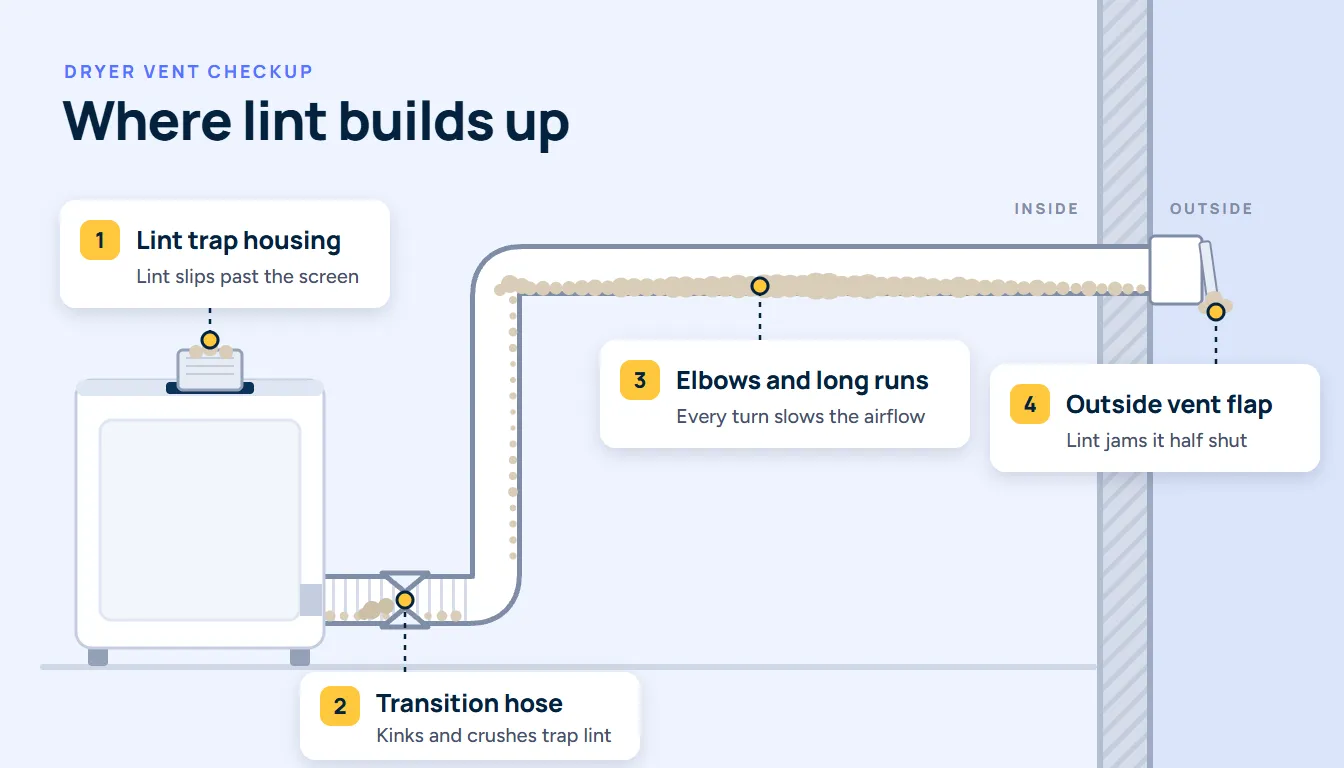
The four spots where lint builds up between your dryer and the outdoors
-
The lint trap housing - Fine lint slips past the screen and packs into the cavity below it, inside the dryer itself.
-
The transition hose - This is the short, flexible hose behind the dryer. It gets pushed against the wall, kinked and crushed, and every pinch becomes a lint trap.
-
Elbows and long runs - Every turn slows the air down, and slow air drops lint. Long horizontal runs through a basement ceiling or an interior wall collect a layer along the bottom.
-
The outside vent flap - Lint packs into the hood and keeps the flap from opening fully. Birds and wasps like these openings too.
Foil, vinyl or metal? Check the hose behind your dryer
Pull the dryer out a few inches and look at the hose connecting it to the wall. This one part says a lot about how fast your vent will clog.

Foil and vinyl hoses trap lint and crush easily. Smooth metal keeps air moving.
-
White vinyl or plastic - This isn’t made for dryer heat. It can sag, melt and burn, and most building codes don’t allow it. If you have one, replace it.
-
Foil accordion - It’s common and cheap, but it crushes easily, and the deep ridges catch lint. It’s also easy to kink when the dryer is pushed back.
-
Semi-rigid or rigid metal - This holds its shape, has a smoother inside, and lets lint blow out instead of piling up. It’s what we recommend.
If your hose is crushed, torn or plastic, we can replace it. See dryer vent repair.
How often should you clean your dryer vent?
The U.S. Fire Administration recommends cleaning the vent at least once a year. Some homes need it more often:
-
Large households - More laundry means more lint. A family doing a load or two a day should think about every six to nine months.
-
Pets - Pet hair adds to the lint and clings to the vent walls.
-
Long or complicated runs - Vents longer than about 25 feet, or with several elbows, slow the air and collect more.
-
Roof and second-floor vents - Lint has to travel up, and a lot of it falls back down.
-
Stacked and compact units - These tight laundry closets usually have short, sharply bent hoses.
Late fall is a good time to have it done, before the heavy winter laundry starts.
What you can do yourself (and what needs a pro)
Do these yourself:
- Clean the lint screen before every load.
- Wash the screen with warm, soapy water once a month. Dryer sheets leave a film that blocks airflow even when the screen looks clean.
- Check the outside flap a few times a year, and clear any lint you can reach.
- Keep the area behind the dryer clear, and don’t push the dryer so far back that the hose crushes.
Leave these to a pro:
- Cleaning the full vent run from the dryer to the outside, especially through walls, ceilings or attics.
- Roof vents and second-story exits.
- Long runs and runs with multiple elbows, where the brushes sold in stores can’t reach or can pack lint tighter.
What a Scrub Ducts dryer vent cleaning includes
A typical visit takes about an hour. We:
- Clear lint and debris from the full vent run, from the dryer to the outside
- Check the outside vent hood for a working flap and strong airflow
- Clean up lint that’s backed up around the dryer
- Take before and after photos so you can see the difference
Dryer vent cleaning starts at $149.99. If you’re also having your air ducts cleaned, the dryer vent is just $100 more, from $449.99 for both in one visit. You’ll know your price before we start.
Learn more about dryer vent cleaning, or request a free estimate and we’ll get you on the schedule.
Dryer vent cleaning across Central Kentucky
We’re a family-owned, NADCA-certified team based in Frankfort, and we clean dryer vents and air ducts throughout Central Kentucky, including Lexington, Louisville, Georgetown, Shelbyville and Lawrenceburg. If your dryer is showing any of the signs above, call us at (502) 539-3083 and we’ll take a look before winter gets busy.